
International Racing Research Lab

International Racing Research Lab

16 posts

ebor2026-en.jpeg
International Racing Research Lab

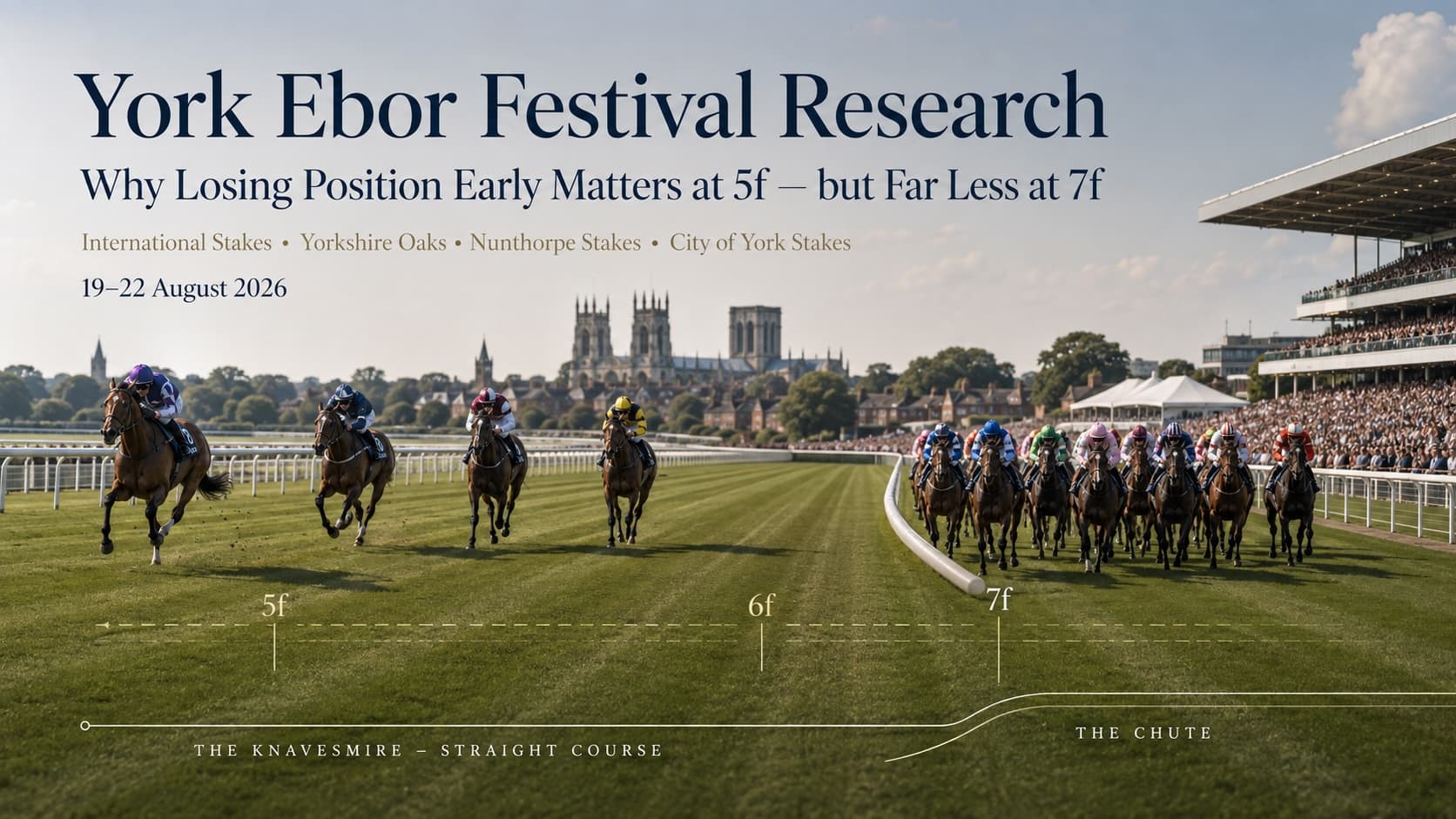
York Ebor Festival Research | Why Losing Position Early Matters at 5f — but Far Less at 7f

York’s recent results show a striking difference between its sprint trips. Over 5f, horses already racing towards the front after two furlongs have reached the first three far more often than those at the rear. Stretch the race to 6f and that gap narrows sharply; move to 7f, from a different course layout, and the historical front/midfield/held-up figures are almost identical. That contrast helps explain why the four days of the Ebor Festival need to be read very differently.

20260802_hero_en.jpeg
International Racing Research Lab

Sunday’s Two Racing Puzzles: Pace Distribution at Deauville, Positioning Before the Decisive Stage in the German Oaks

The 18-runner straight-course handicap at Deauville cannot be assessed by draw alone. The crucial questions are where the early pace is located and which group the main contenders are likely to follow. At Düsseldorf, the German Oaks presents a different challenge: historical evidence suggests that leading contenders usually need to secure a workable position before the final 600 metres.

core-hero-en.jpeg
International Racing Research Lab

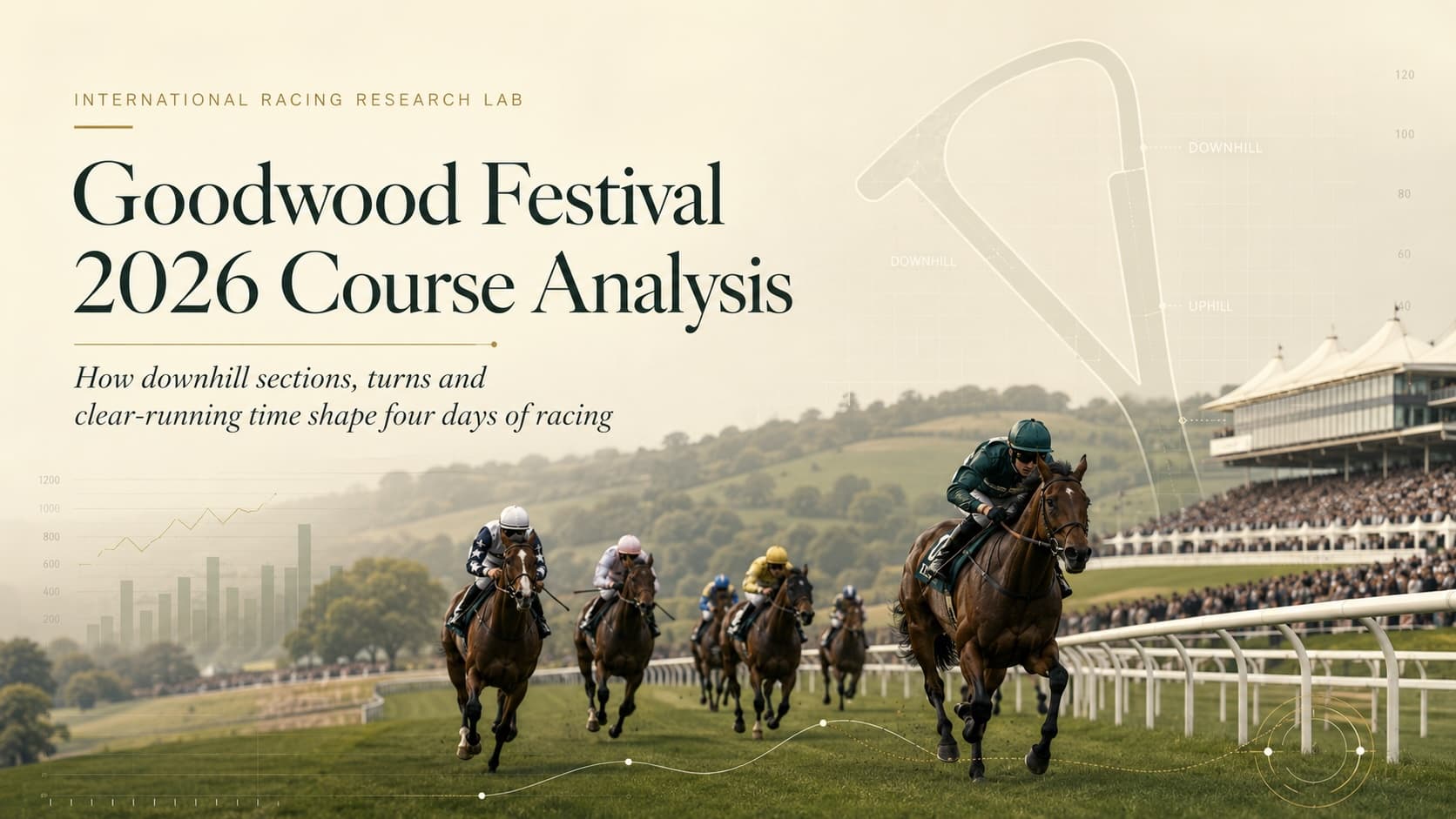
Goodwood Festival 2026 Course Analysis | How Downhill Sections, Turns and Pace Shape Four Days of Racing

The easiest mistake to make at Goodwood is to focus on the draw without considering how the field is likely to take shape. In the five- and six-furlong races, the first question is where the early speed is concentrated. Over a mile and around the turns, the priority shifts to position before the bend. Even a strong closer may struggle if the downhill run compresses the field and leaves too little time to find clear running room.

greyville-hero-en.jpeg
International Racing Research Lab

Sunday Overseas Racing Research: Greyville Closing Speed Still Needs the Right Race Shape, While Munich’s 16-Runner Race May Be Easier to Narrow

Greyville’s historical data shows that runners with the strongest recent 400-metre and 600-metre closing figures have produced clearly higher win and top-three rates, but finishing speed still requires the right pace, cover and clear running room. At Munich, Race 5 has 16 runners yet a more concentrated set of combined ratings, while the ten-runner Race 6 has several leading contenders with very similar assessments and therefore requires greater flexibility.

ascot-friday-hero-en.jpeg
International Racing Research Lab

Ascot Saturday Preview: Friday Left the Draw Question Open — Pace and Position Matter More

Friday’s six-race card produced no persistent advantage for either high or low draws, while the stands side, middle and far side of the straight appeared broadly similar. That makes Saturday’s 7f handicap and straight-mile contest races to assess through pace, field position and cover rather than draw alone. Over 1m4f, Friday again favoured a runner who travelled behind the pace and was already within striking distance before the final bend.

irishoak-hero-en.jpg
International Racing Research Lab

Irish Oaks Final Read: Held-Up Favourite Faces a Tactical Test

THUNDERING ON is the early favourite for the 2026 Irish Oaks and has one of the strongest recent finishing profiles in the field. However, she is expected to be held up, leaving her reliant on the leaders setting a genuine pace. Several runners are likely to race prominently, but they may not compete aggressively for the lead. If the leaders are still travelling comfortably turning for home on Good to Firm ground, THUNDERING ON may have too much ground to recover in the closing stages.

20260711-blog-en-hero.jpg
International Racing Research Lab

July Cup Day Final Read: Middle Draws Have Performed Best, While High Draws Face a Bigger Test

Thursday initially pointed towards lower stalls and prominent runners, but Friday changed the shape of the evidence. Middle draws have produced the most consistent results, lower draws have remained competitive, and the high section continues to face a more difficult test in larger straight-course fields. Draw, pace, tactical position and finishing strength now need to be assessed together.

20260705-hero-en.jpg
International Racing Research Lab

Germany and France: Three Things the Market Ranking May Not Fully Explain

Sunday’s overseas racing focus is Hamburg in Germany and Saint-Cloud in France, with 11 races in total. The key question is not simply which horses are shortest in the market, but whether the market ranking is fully supported by track condition, pace shape, running position and MA288’s rating consensus. For today’s card, MA288 compares odds, ratings, pace position, finishing strength and race conditions before forming each race view.

20260628-hero-en.jpg
International Racing Research Lab

Irish Derby Day at the Curragh: Why Draw Bias Alone Is Not Enough

The first two days of the Irish Derby Festival have not produced one dependable draw rule. Saturday’s 24 top-three places were divided equally between the low, middle and high draw sections, while Sunday brings fresh ground and an official going change to Good. MA288’s historical data, pace map, recent finishing figures, AI models and current prices suggest that the more important question is whether each runner’s draw, early position and finishing strength work together—and whether that advantage has already been reflected by the market.